
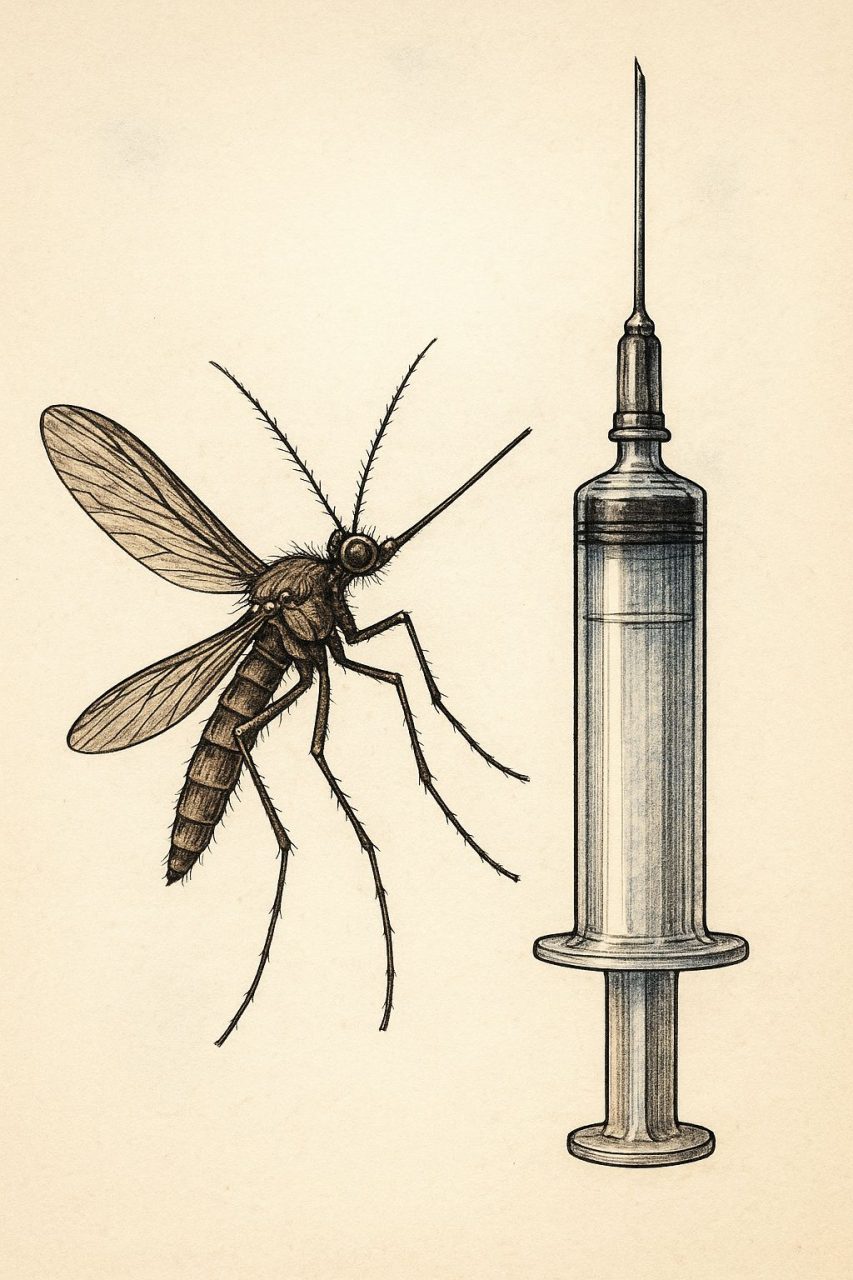
A Free Now Foundation Exclusive
It’s springtime in Washington, D.C., and after decades of lying dormant, the rarely seen bloom has finally unfurled: government transparency. Like the elusive corpse flower, famous for its once-in-a-decade appearance, accountability has made a surprise showing at the FDA and CDC. In an unexpected announcement, the agencies have issued a high-stakes recommendation: adults aged 60 and up should hold off on taking the Ixchiq chikungunya vaccine after severe reactions, hospitalizations, and two deaths.
While more than 65 vaccines have been pulled from the market in U.S. history, it remains extraordinarily rare for regulators to openly admit they’re doing so because of clear safety signals. Most withdrawals are quietly reframed or buried in technical language. The CDC even removed its own list of discontinued vaccines after Free Now Foundation Chairman Alix Mayer cited it in a 2020 Defender article. That list had to be recovered from the Wayback Machine.
But this time, they didn’t hide behind jargon. They hit pause.
If you’re looking for the influence of Secretary Robert Kennedy Jr., here it is: proof that when someone forces the government to look in the mirror, we all get to stop pretending nothing’s wrong.
The Chikungunya Vaccine
Chikungunya is a mosquito-borne virus that causes fever, joint pain, headache, muscle aches, and vomiting. While most people recover, symptoms can last weeks or even months. In rare cases, a chikungunya infection can lead to death in infants, the elderly, or the immunocompromised.
The disease is most common in tropical and subtropical areas, especially parts of Africa, Asia, and Central and South America. In 2024, the United States saw only 223 reported cases; nearly all of them in travelers returning from affected regions.
Since the CDC only recommended the vaccine for U.S. adults traveling abroad to places where chikungunya is circulating, it was never aimed at the general U.S. population. It’s more accurate to say that it was intended to prevent disease in jet-setters headed for vacation or work in high-risk zones. According to Chairman Mayer, Chronic Fatigue Syndrome is called “Yuppie Flu” since affluent yuppies would load up on travel vaccines before flying out to exotic locations. “I was in a clinical trial for an antiviral,” she said. “I sat in the waiting room talking to people in the study, and almost without exception they’d become sick after an international trip they’d gotten vaccinated for.”
All of this to say, the chikungunya vaccine’s uptake was limited to a relatively small group, comparatively speaking. Yet the red flags emerged fast.
The Joint Statement
On May 9, 2025, the FDA and CDC issued a joint statement recommending an immediate halt in the administration of the Ixchiq vaccine for adults 60 and older, which is the only chikungunya vaccine approved in the United States.
The move followed 17 reported serious adverse events in elderly patients who received the vaccine, including cardiac and neurological complications, and two deaths. Six of the serious adverse events occurred in the U.S., with the rest reported abroad, where the vaccine has also been in use.
The FDA’s new directive comes with the promise of a “thorough assessment” of risks versus benefits. But for those following RFK Jr.’s vaccine safety advocacy, the bigger story is that someone finally flinched.
Protection Came With a Side Of Injury
Manufactured by Valneva, the Ixchiq vaccine was approved in 2023 and rolled out in 2024. It uses a live attenuated virus, meaning it contains a weakened but still active form of chikungunya. In other words, recipients are injected with a hobbled version of the virus itself.
According to the FDA’s own data, during pre-licensure clinical trials:
- 11.7% of vaccine recipients developed virus-like symptoms (compared to 0.6% in the placebo group)
- 1.6% experienced severe reactions
- 0.5% had reactions that lasted over 30 days (compared to 0% in the placebo group)
In one post-market case, an 86-year-old man received the vaccine before a trip to South Asia and ended up hospitalized for 23 days, including time in the ICU.
Yet this vaccine sailed through approval, and recommendations followed swiftly. Had RFK Jr. or anyone in his camp raised alarms back then, the usual crowd would have branded them anti-science. Now the FDA is telling seniors, “Never mind! Maybe don’t get this one after all.”
A CDC About-Face
The CDC’s own Advisory Committee on Immunization Practices (ACIP) took action in April (beginning at the 4:50:00 mark), urging that the vaccine not be used in adults 65 and older, citing the disturbing postmarketing reports. CDC officials acknowledged that symptoms in the adverse event reports began within five days of vaccination, and that small timing window strongly suggests causality, not coincidence.
They estimated that 1 out of every 1,220 older adults who get the vaccine may experience a serious adverse reaction. And this is for a disease that most Americans will never even encounter, let alone die from. The risk-benefit math didn’t check out, and, unlike in the past, the committee and agencies didn’t just ignore it.
Europe Took Action First (Of Course)
Unsurprisingly, European regulators beat the FDA to the punch. On May 7th of this year, the European Medicines Agency advised halting use of Ixchiq in people over 65 pending further review.
Valneva, the manufacturer, said it’s cooperating with regulators, but continues to downplay the risks. In a statement that reads more like PR damage control than contrition, the company noted that “adverse events may not be causally related to vaccination” and that over 40,000 doses have been administered globally.
Translation: “Sure, a few people landed in the ICU, but most didn’t. Let’s not panic.”
The Secretary Kennedy Factor
This moment marks a paradigm shift. For years, Secretary Kennedy was dismissed, demonized, and censored for daring to question vaccine safety protocols and government capture by pharma interests. He’s been caricatured as anti-science for demanding exactly what just happened: data transparency and caution when lives are at stake.
Now, with Kennedy’s influence rising in public health and political circles, the tone has changed. No more gaslighting Americans. No more pretending that “rare” means “irrelevant.”
It’s the kind of accountability that’s been missing for decades.
What Took So Long?
The warning signs were there from day one; the clinical data wasn’t subtle. The disease risk for U.S. residents was niche at best. Yet this vaccine was pushed through, approved, and promoted. This time, someone hit the brakes. And for that, we can thank the mounting pressure from watchdogs, data analysts, and one relentless Secretary Kennedy who refused for the past 19 years to ever give up.
The FDA says it’ll provide an update once its safety review is complete. Let’s hope it sticks to the same level of honesty and doesn’t revert to the rubber-stamp culture we’ve come to expect.
Levi Quackenboss arrived on the medical freedom scene in 2015, launching one of the most viral blogs in the history of the movement. Whether it's distilling the science, explaining legal strategy, or motivating thousands of people to carry out calls to actions, LQ can be counted on to tackle issues with ferocity and humor.

0 Comments