republished with permission from The Legal Glass Substack
This piece is more personal than my usual Substack offerings.
Last week, the one college friend I still spoke to told me something I think I already knew: the group had decided I wasn’t to be invited back into the fold.
There was no confrontation. No final conversation. Just a quiet closing of ranks, confirmed years after the fracture itself.
Like so many friendships, ours didn’t survive COVID.
But that’s too simple a sentence for what actually happened.
We weren’t just separated by a virus. We were separated by what it revealed—about trust, about identity, about how quickly people can turn on one another when fear and certainty combine.
Every one of them lined up on the same side: masks, closures, lockdowns, vaccines, compliance. Not just support, but certainty. Moral certainty.
And on the other side were people like me—not denying illness, but questioning the response. Questioning the scale, the cost, and the speed at which complex medical interventions were declared “safe and effective,” not as a conclusion reached after long-term study, but as a premise used to shut down dissent.
I wasn’t trying to be difficult or political. I was trying to think things through while the world seemed to descend into something unrecognizable. I hoped for dialogue. I believed I had something to offer.
I had spent years studying regulatory systems, writing about institutional capture at agencies like the CDC, EPA, and FDA, and understanding how incentives shape outcomes. I had always been skeptical of concentrated power—corporate or governmental—and suddenly I was watching both align in a way that felt deeply wrong.
The messaging was too coordinated. The dissent was too quickly silenced. The allowable conversation was too narrow. The vaccine was presented almost immediately as the only way out, even as the only way “back to normal.” Early alternative treatments were mocked and dismissed despite long histories of use.
At the same time, perhaps because of my working-class roots, I could see what these policies meant for people who couldn’t simply log on from home and keep collecting a paycheck: the massage therapist, the small business owner, the service worker whose job disappeared overnight.
Not everyone was made whole. Not everyone could absorb years of shutdowns.
“We’re all in this together” struck me as not just untrue, but cruel.
And there was no room to say that. No room even to ask.
The social pressure was immediate and absolute.
Within my college friend group, the shift was jarring. For asking questions—about inconsistent rules, disproportionate harms, and whether this was truly about health or something else entirely—I was labeled.
A conspiracy theorist. A Trumper. Co-opted by the right.
Much of this came through one person—a woman who had once stood beside me as my maid of honor. Someone who had leaned on me, trusted me, claimed to understand people deeply. A psychologist.
She was the one who reduced me the fastest. The one who labeled instead of listening. The one who communicated the group’s disinterest in any real conversation.
That betrayal is the one I still feel most.
The irony was almost absurd. I had voted Democrat my entire adult life. I supported the same policies I always had. In some ways, I was more “crunchy” than the rest of them. None of it mattered. The tribe had decided: compliance was virtue. Even “my body, my choice” suddenly had limits.
I hadn’t become “right wing.” I had simply fallen out of alignment with what the group now required—and that was enough to be recast as something I wasn’t. Once that shift happened, nuance disappeared. You were either aligned with sweeping restrictions on basic rights, or you were selfish, dangerous, something to be excluded from public life.
I tried, at first, to reach them. I sent articles, studies, questions—anything that might open a conversation. I explained what I believed: that the certainty didn’t match the data, that risks were not fully understood, that people deserved informed choice.
I was told not to send anything. They weren’t interested.
Whether that was truly the group’s position or filtered through one person, I still don’t know.
But it was the end of dialogue.
And then, quietly, it became something else.
Erasure.
For nearly thirty years, we had met annually for our own private reunion—a weekend of cooking, drinking, and sharing our lives. I planned my summers around it. These women were my anchor to a formative, joyful time.
But from 2020 onward, I was no longer included.
The first year, I opted out. Their conditions—separate bedrooms, masks, distance, no physical contact—felt not just excessive but unsettling. I couldn’t participate in what felt like theater.
That decision triggered backlash. I was told I was mocking their fear. I was called names. Three confronted me; the others stayed silent.
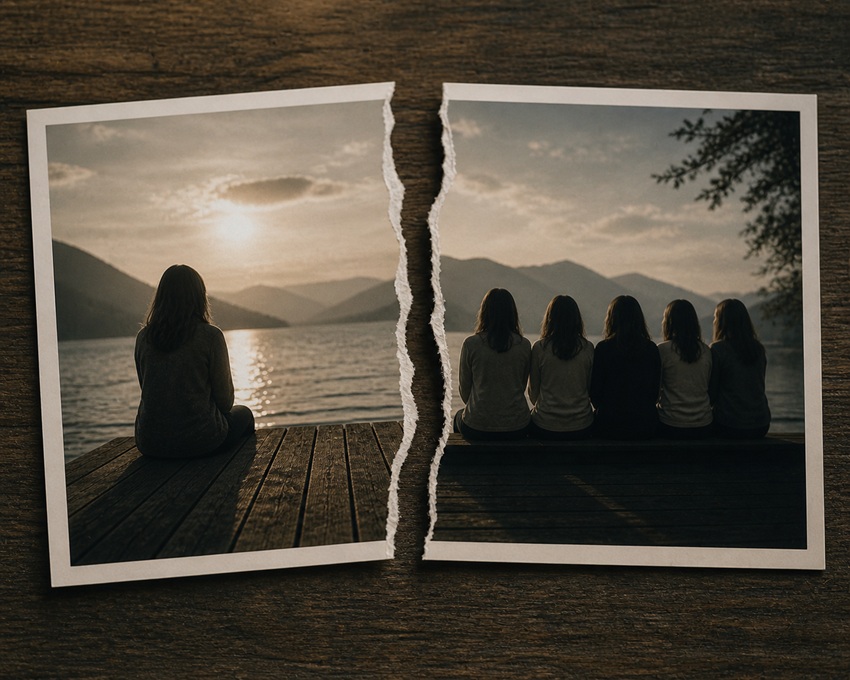
They had the reunion without me. No call, no follow-up. Just photos on Facebook confirming what I already knew: six had become five.
I disappeared.
Around the same time, I lost my job for refusing to comply with COVID policies. After nearly two decades as a professor, it was one of the most destabilizing moments of my life.
My former maid of honor said nothing. No sympathy. No acknowledgment.
No one reached out.
That, more than anything, is what I cannot forget.
Because I remember who we used to be—who I believed we were.
When one of us struggled, we showed up. We called. We insisted on connection.
Friendship meant something.
Until it didn’t.
Until it became conditional—on agreement, on silence, on compliance with authority long after it stopped making sense.
At some point, it stopped being about health. It became about who got to claim being “caring,” and who could be excluded for not performing it correctly.
It was a stunning inversion of truth.
What COVID revealed—at least to me—was not just disagreement, but a moral certainty that made cruelty feel justified. From where I stood, people who saw themselves as compassionate became comfortable with exclusion, coercion, and stripping others of dignity—so long as it was done in the name of safety.
And once you’ve seen that in people you love, it is hard to unsee.
I can see now that much of this was driven by fear—fear for themselves, for their families, and a genuine desire to protect. But fear doesn’t erase what followed—the labeling, the exclusion, the shutting down of any real conversation.
Years passed. Reunions continued without me. Each one brought its own wave of grief—disproportionate, maybe, for friendships that existed mostly one weekend a year, but real nonetheless. It felt like being erased from something that had mattered deeply.
In 2024, one of them reached out—but too late to realistically accept. It felt like a gesture, not a genuine invitation. I said I’d be open the following year.
That invitation never came.
That stung—again.
Because being pushed out of a group like this isn’t just social. It’s existential. Belonging matters. And when you are cast out, it cuts deeper than you expect.
For years, I wanted the chance to finish the conversation. I wanted to be understood.
During that same period, my role in all of this deepened in ways they never saw, or chose not to see.
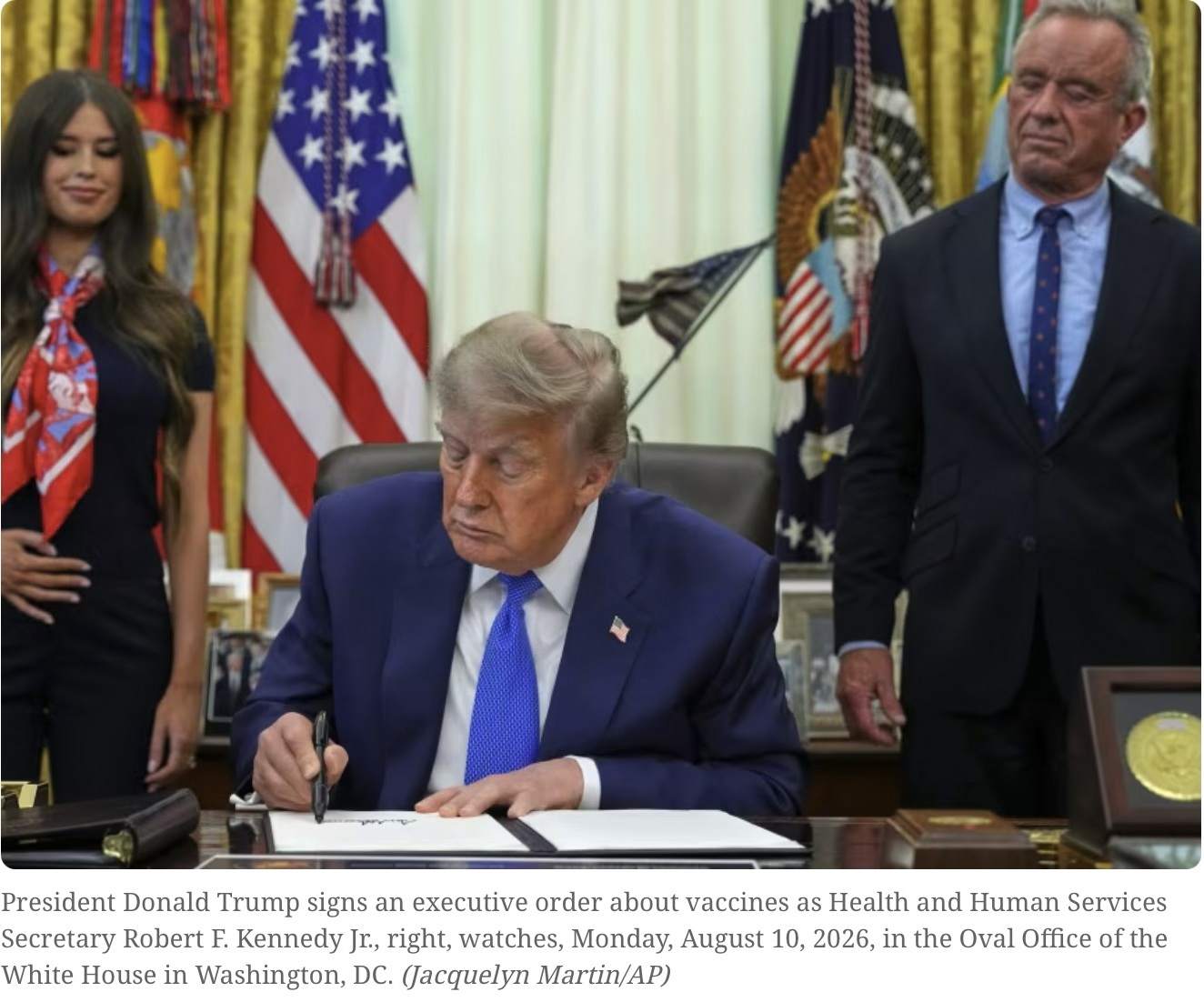
I became a legal director and litigator for the California Chapter of Children’s Health Defense, Robert F. Kennedy Jr.’s organization, working on lawsuits challenging vaccine mandates and school policies that excluded children for noncompliance with masking rules. I saw firsthand how these policies were implemented—not in theory, but in practice.
And what I witnessed was not abstract policy disagreement. It was cruelty.
Children isolated and humiliated. Families pressured and threatened. Educators enforcing rules with a rigidity that felt less like care and more like compliance for its own sake.
At the same time, I was doing deep research—reviewing expert declarations, understanding the Emergency Use Authorization process, the regulatory maneuvering, the liability structures. I saw data raising concerns long before most people were aware there were questions to ask.
I probably knew more about the underlying framework than many of the people dismissing me.
And I believed, for a time, that might matter.
I wanted the opportunity to show them I wasn’t a caricature—not co-opted, not untethered, not a conspiracy theorist—but someone working from research, experience, and genuine concern.
But then I saw how they spoke about Robert F. Kennedy Jr.—someone who had written extensively documented work on the pandemic response and its underlying systems. They didn’t engage with his arguments. They didn’t read the work. They mocked and dismissed him outright.
And I understood then that nothing I had to offer would be received any differently.
We were living in entirely different informational ecosystems—and operating from entirely different value systems.
There was no bridging that gap.
And they had no interest in trying.
Six years have passed since that fracture.
And in that time, many of my positions have been validated. The COVID response was an unmitigated disaster—politically, socially, economically, medically, morally. People lost jobs, businesses, educations, relationships, bodily autonomy, and years of ordinary life. Children were harmed. Families were divided. Dissent was punished. Rights were treated as privileges contingent on compliance.
Masks did not deliver what was promised. Lockdowns inflicted enormous damage. The “safe and effective” narrative concealed alarming data that was never openly discussed. Adverse effects continue to emerge, while early claims of certainty have been quietly revised or erased.
This was not a small mistake. It was a catastrophe sold as virtue.
And yet there has been no reckoning.
The world remains divided into incompatible understandings of what happened. One side recognizes the scale of the failure; the other clings to the belief that it was a necessary, well-intentioned response.
But the silence gives it away.
The COVID years are not celebrated. They are being memory-holed—as if the world had not shifted, as if the damage were not real, as if real injuries have not occurred.
One of the women in that group is now seriously ill. I won’t pretend to know why. But it sharpens something I had already come to understand: that my anger was never just anger. It was, in part, fear for people I cared about, and a desire to reach them before it was too late, even when they didn’t want to hear it.
There has been no reckoning for the COVID response—globally or personally. The wounds remain.
Within this college “friend” group, there has only been silence.
And, apparently, a vote.
I was told it was “mixed,” but the result was clear: There was too much water under the bridge. I will not be invited back.
And while it stings, I know the truth of it too: we are no longer friends.
COVID broke the bond that began freshman year in college—more than forty years ago.
Because COVID changed something in me as well.
It made me value authenticity over belonging. It made me unwilling to maintain relationships that require my silence or self-erasure.
I spoke up knowing it might cost me—my job, my relationships, my reputation.
I would do it again.
What I have come to understand is this: some conversations will never happen. Some people will not follow you where your convictions take you. Some will erase you rather than reconsider themselves.
And that is part of the cost.
The closure we hope for—the acknowledgment, the apology, the chance to explain—may never come.
So the work becomes our own.
To let go of the expectation that the past can be restored.
To accept that some people would rather lose you than question themselves.
To refuse to shrink in order to belong.
It doesn’t make the loss easier.
But it makes the path forward clearer.
This is not a request to be welcomed back.
It is a decision to stop needing to be.
To accept that I matter more than their opinions of me.
And to choose myself.
That may be the only kind of closure that’s real.
Rita is a medical freedom attorney and former law school professor who now writes on a variety of medical freedom issues. A former FNF board member, Rita was also part of the legal team at FLTJ, the firm that represented Free Now Foundation in lawsuits against K-12 Covid mandates and prolonged states of emergency. You can follow more of Rita’s work at: https://legalglass.substack.com/
0 Comments