This post originally appeared on The Legal Glass on November 3, 2025 and republished with permission. Please follow me on Substack for more medical freedom content.
Public catastrophes usually end with mourning and inquiry—commissions, apologies, memorials. Covid ended with none. Masks came off, mandates withdrawn or struck down, and the world rushed to forget. Yet beneath the hum of daily life, a moral silence lingers, heavy as contagion.
Unanswered Questions and Unpunished Lies
In the United States, millions lost jobs, savings, and small businesses. Children lost formative years of learning and socialization. Families and friendships fractured under mandates and fear. Funerals happened on Zoom; weddings were postponed; those who declined vaccination were told to stay away. The harm was not abstract—it was personal and enduring.
Yet no comprehensive, congressionally-mandated national commission has examined how the most sweeping suspension of civil liberties in modern history was decided, or why contradictory data were buried. No one has explained how fear became policy, or how “two weeks to flatten the curve” metastasized into years of control. The absence of inquiry is not negligence—it is a wound deliberately left open.
While the full extent of institutional deception remains disputed, some falsehoods are beyond doubt. Documents released through Freedom of Information Act (FOIA) requests show senior officials discussing how to shape public perception of the virus’s origin and discredit scientists raising the possibility of genetic manipulation. The same cache reveals internal correspondence about coordinating social-media takedowns of dissenting experts and concealing safety-signal data that conflicted with the official narrative. Emails between Dr. Anthony Fauci and senior NIH staffers show early acknowledgment that the Wuhan Institute’s activities overlapped with U.S.-funded gain-of-function work—even as public statements insisted otherwise. Trial data obtained through FOIA later showed rapid waning of vaccine efficacy and evidence of previously unreported adverse events, yet federal agencies continued to assure the public that the products were “safe and effective.” Dr. Fauci and Dr. Deborah Birx have since conceded that the vaccines did not stop infection or transmission, contradicting what Americans were told in 2021 to justify widespread mandates. President Biden’s televised promise—“You won’t catch Covid if you take this vaccine”—became the era’s moral litmus, turning uncertainty into virtue and dissenters into pariahs in what officials dubbed “the pandemic of the unvaccinated”—another lie.
Many other pandemic-era claims—once delivered as scientific certainty—have also collapsed under their own contradictions. Yet none of the officials who made them have faced censure or even serious questioning. Fauci received a presidential pardon and now holds a university post, still lionized by half the country, even as the other half calls for his prosecution. Birx has returned to the television circuit, welcomed by an unrepentant media establishment that helped manufacture and sustain the climate of fear. The architects of the crisis prosper; those who questioned them remain stigmatized. In a moral universe, deception would bring consequence. In this one, it brings book deals and endowed chairs.
Why the Reckoning Never Came
So why isn’t anyone in jail—or at the very least removed from positions of power?
Accountability failed for structural, political, and psychological reasons.
Structurally, the machinery of oversight was built to protect itself. The same agencies that designed, funded, and approved pandemic policies would have to investigate their own conduct. The FDA, CDC, and NIH acted as both promoters and regulators of the same policies—a closed loop where self-audit would mean self-incrimination. Admitting error would invite lawsuits and expose how much of the response was orchestrated: data massaged to fit narratives, fear amplified to advance policy, dissent erased. Those in charge know that if the public ever grasped the scope of manipulation—how “science” became stagecraft and trust was weaponized—the authority that sustains them would collapse.
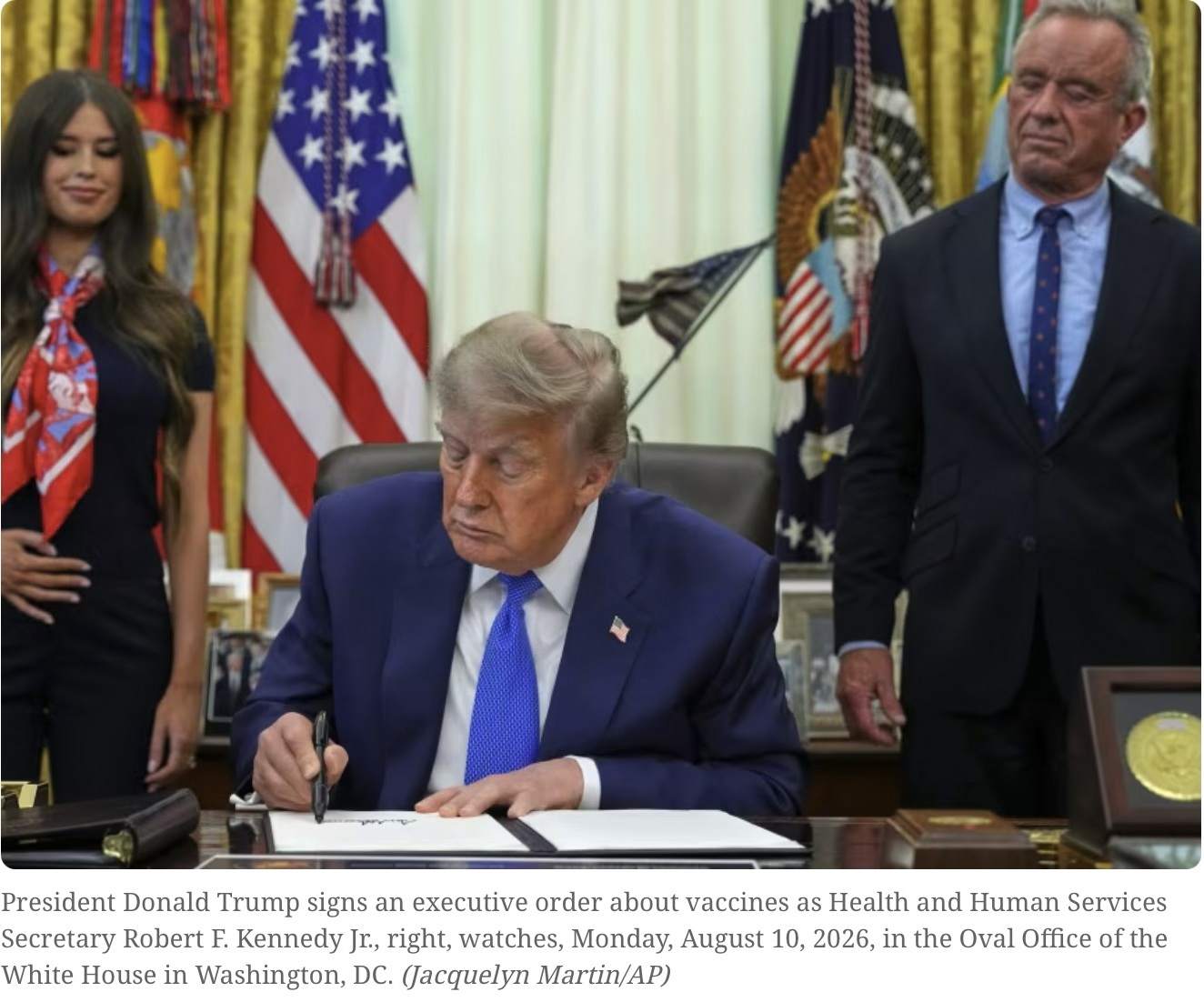
Even the reformers have found the walls unyielding. Figures like Robert F. Kennedy Jr. and Dr. Jay Bhattacharya entered the public arena promising transparency, informed consent, and an end to the coercive mindset that defined the pandemic years. Yet the bureaucracy they inherited has resisted them at every turn—protected by the same web of funding, contracts, and institutional self-interest that enabled the original deception. To many who lived through the mandates, their words sound sincere but their progress painfully slow. The machinery of public health may have changed its language, but not its nature. For the wounded, “individual choice” feels like too little, too late.
Politically, incentives for truth are almost nonexistent. Few leaders on either side have demanded a real inquiry. For Democrats, confession would mean conceding that their moral certainty and stricter measures caused real harm; for Republicans, it would mean revisiting their own complicity. The pandemic began under a Republican administration, and emergency powers expanded with bipartisan funding and approval. Neither faction wishes to expose how easily those powers can be repurposed. Both prefer silence to accountability.
Psychologically, the barrier may run even deeper. For many educated professionals, public health ceased to be a discipline and became a moral identity—a badge of virtue. Compliance signaled belonging; skepticism marked apostasy. When evidence of failure surfaced, curiosity gave way to ego-defense. To acknowledge that they had been misled would mean forfeiting the moral high ground that defined their self-image. Their certainty, once a shield, hardened into pride—and pride, as history keeps proving, is the final barrier to truth.
But even if political will and professional pride could be overcome, one barrier would remain—the one sealed by national security itself. From the start, COVID policy operated inside a biodefense framework. Procurement, contracting, and even communication chains ran through the Department of Defense and its partners under Operation Warp Speed. By routing vaccine development through military “Other Transaction Authority” contracts—normally reserved for defense prototypes—officials were able to bypass the usual regulatory safeguards and public disclosure rules that govern civilian medicines. Once pandemic management entered the national-security system, transparency died by classification. The same secrecy laws that shield military operations could now arguably cover large portions of the response—the contracts, the logistics, even the data pipelines. To expose what really happened would require piercing that shield and admitting that civilian health agencies operated within a defense command structure that blurred the line between public health and military operation. No administration wants to reopen that question; doing so would ignite debates over Posse Comitatus, civilian oversight, and whether citizens were effectively treated as a domestic threat. The “no reckoning,” then, is not merely avoidance—it is structural, and strategic. The truth is buried beneath the very machinery designed to keep wartime secrets—and perhaps to ensure they are never unearthed.
The Human Consequence
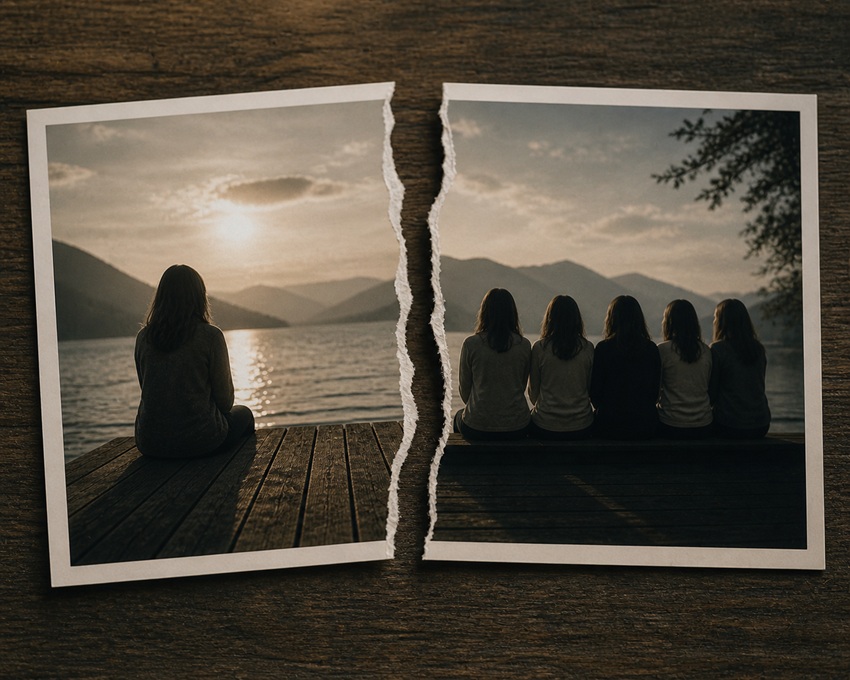
Even if those with status or power remain willfully silent, ordinary people sense the lies even when they can’t prove them on paper. The result is not healing but estrangement—a psychic fracture running through families, friendships, workplaces, and entire communities.
For many, life seems to have simply moved on—outrage repackaged for the next cause. The slogans are new, but the moral certainty unchanged. The same social feeds that once scolded neighbors for failing to comply now showcase brunch photos or the next weekend protest, without a hint of reflection.
Yet beneath that surface return to normalcy, the damage runs deep. Rates of anxiety, depression, and substance abuse have soared; workers’ compensation and disability claims for mental health or vaccine-related harms have reached record highs. Millions who once trusted doctors, teachers, or news anchors now flinch at their authority. Others remain trapped in the opposite spell—still masking, still isolating, still scanning for invisible threats years later. The manipulation broke something essential: the ordinary trust between human beings and the institutions meant to serve them. What lingers is not recovery but a quiet, chronic fear that the next decree will come and no one will dare say no.
And then there are those who cannot move on—the ones who consider the Covid years the defining betrayal of their lives, the witnesses who will not let what was done vanish into the black hole of oblivion. They remember being shamed, fired, or banished for refusing the mandates; watching their children regress or their parents die alone behind plexiglass; carrying the knowledge that the world they trusted turned on them overnight. Their refusal to forget is not obsession—it is conscience. They are the living memory of what was done, and they will not let the story end in silence.
When people are denied recognition for too long—when their suffering is met with mockery or denial—something dark begins to grow. Resentment metastasizes; the longer truth is withheld, the more corrosive the anger becomes. Gaslight a population long enough, and it will eventually burn down the house to prove the light was real.
Yet this estrangement also carries the seeds of renewal. Some are choosing not to fight to remain in a corrupted system but to walk away from it altogether. Out of disillusionment has come innovation—independent Substacks and podcasts, parallel health-care networks, homeschool co-ops, local farms, alternative economies, and new movements for medical and health autonomy. These are acts of reclamation—a citizenry quietly creating the trust and meaning that the old order forfeited. When enough people withdraw their consent, the structure of deceit eventually collapses under its own weight.
It has happened before. In the waning days of Communist Czechoslovakia, the official press was so riddled with propaganda that citizens built a “parallel polis”—an underground network of truth, art, and free association that rendered the regime’s authority irrelevant long before it fell. Something similar may be emerging now: a parallel culture rising from the wreckage of a broken one. Whether it leads to collapse or renewal will depend on whether those in power learn humility—or insist, yet again, on control.
When Societies Refuse to Apologize for Wrongdoing
History offers two paths after collective wrongdoing. Some nations and institutions have faced their sins head-on; others have buried them beneath moral justification. The first path is painful but cleansing. The second—denial, silence, and self-righteousness—breeds cynicism and eventual collapse.
America has walked both roads. During the McCarthy era, accusation became virtue and punishment its proof. In the 1940s, over 100,000 Japanese Americans were sent to internment camps in the name of “security.” Only decades later did the nation apologize, admitting that hysteria, not patriotism, drove the policy. And for forty years, the Tuskegee experiment allowed Black men to suffer untreated disease—a public health lie justified as “science.” Healing began only when the truth was spoken aloud, the victims named, and the apologies made.
The Covid years revealed the same psychology in modern form. Fear and moral certainty fused again, this time under the banner of “public health.” Those who declined vaccination were vilified as threats to society. They were barred from workplaces, schools, restaurants, and even hospitals. Television commentators demanded they be denied medical care. MSNBC host Jonathan Capehart dismissed skeptics as “lunatics who won’t take any of the Covid vaccines.” Dr. Leana Wen declared, “Frankly, we know we can’t trust the unvaccinated.” Late-night host Jimmy Kimmel joked, “Vaccinated person having a heart attack? Come on in, we’ll take care of you. Unvaccinated person who gobbled horse goo? Rest in peace, Wheezy.” And Alabama governor Kay Ivey insisted, “It’s time to start blaming the unvaccinated folks, not the regular folks.” In Australia, quarantine camps made metaphor literal. The cruelty was rationalized as compassion, the segregation as safety. No one in authority has yet apologized.
Each of these episodes—past and present—follows the same pattern: moral panics dressed in the language of virtue, bureaucracies claiming necessity, and ordinary people made scapegoats. History teaches that healing begins only when truth is acknowledged—when those who inflicted harm have the courage to name it. By refusing to confront how fear was weaponized during Covid—how dissent was crushed and humanity divided—Western democracies teach their citizens that moral theater now substitutes for justice.
A civilization that cannot face its own cruelty will repeat it. The reckoning always comes—but the longer it is delayed, the harsher it becomes.
What Happens Next
When there is no accountability, truth becomes private property—something whispered among friends but never spoken aloud.
When resentment festers unchecked, it becomes intergenerational. The children who lost years of schooling, friendship, and ordinary human contact will one day ask why. So will the young adults who were masked, coerced, and threatened with expulsion from campuses unless they complied—some now living with injuries that have altered the course of their lives. They will read the archived tweets and executive orders, the boasts of “following the science,” and they will see that their fear, isolation, and suffering were not acts of nature but choices—made by people who have never been called to answer for them.
A civilization can recover from fear, but not from forgetting. When truth is buried to preserve power, it does not vanish—it waits, patient as rot beneath the floorboards.
Every lie demands its reckoning. The longer it is denied, the more ruin it requires to be heard.
Rita is a medical freedom attorney and former law school professor who now writes on a variety of medical freedom issues. A former FNF board member, Rita was also part of the legal team at FLTJ, the firm that represented Free Now Foundation in lawsuits against K-12 Covid mandates and prolonged states of emergency. You can follow more of Rita’s work at: https://legalglass.substack.com/
0 Comments