
republished with permission from The Legal Glass Substack
Author’s Note: ACIP will accept public comments on the upcoming COVID vaccine meeting until March 12, 2026 at 11:59 p.m. ET.
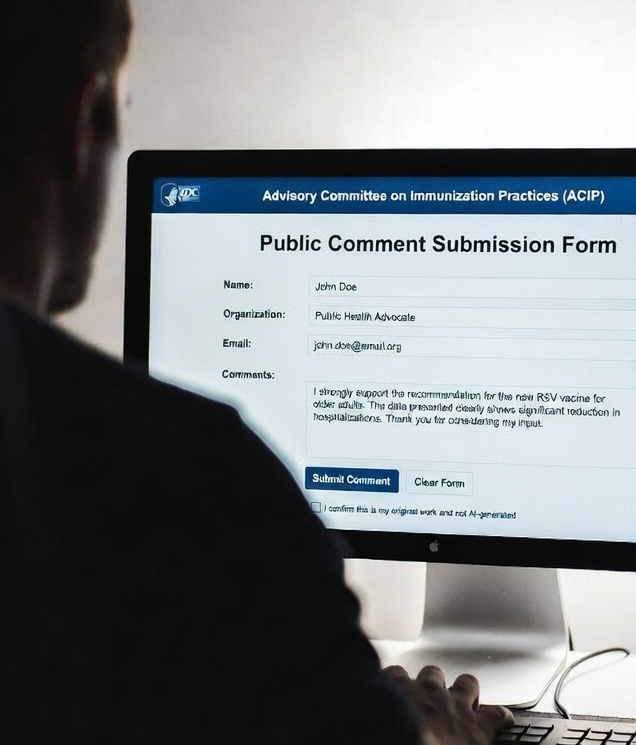
Submit a comment:
https://www.regulations.gov/docket/CDC-2026-0199
On March 18, the Advisory Committee on Immunization Practices (ACIP) will convene to review COVID vaccines and consider future recommendations. The committee’s discussion may influence whether the shots remain recommended for broad populations, are restricted to narrower high-risk groups, or are reconsidered entirely.
To make those decisions, ACIP members will examine clinical data from manufacturers, peer-reviewed studies, and post-marketing safety signals. Among the most important sources of real-world safety data are the federal surveillance systems used to monitor vaccine adverse events, including the Vaccine Adverse Event Reporting System (VAERS), the CDC’s v-safe monitoring program, and the Vaccine Safety Datalink (VSD).
During the rollout, federal health authorities repeatedly assured the public that this surveillance architecture would detect vaccine harms quickly and guide policy if problems emerged.
Yet millions of Americans now say they—or someone they know—experienced serious health problems after receiving a COVID shot, and many report knowing someone who died soon after vaccination, even as many public health officials continue to insist that serious adverse events remain extremely rare.
The gap between official assurances and lived experience has become one of the defining credibility crises of the pandemic era.
This article examines the surveillance systems that were supposed to detect vaccine harms, how those systems failed to function as promised, and whether ACIP will confront those failures as it considers the future of COVID vaccine policy.
The Surveillance Architecture and Five Years of Obscured Data
The problem is not simply disagreement about the data. It is that the systems meant to capture vaccine injuries often failed to do so—or failed to respond when signals appeared.
Whether through structural limitations, restricted access to key datasets, or policy decisions that discouraged reporting, the safety architecture broke down in three distinct ways.
First, in the case of the Vaccine Adverse Event Reporting System (VAERS) and the v-safe monitoring program, safety signals emerged—but were minimized or dismissed.
Second, in the Vaccine Safety Datalink, the most powerful datasets remained largely inaccessible to the public, leaving Americans dependent on internal analyses they could not independently examine.
And in still other cases, including Occupational Safety and Health Administration (OSHA) workplace reporting policies, the system discouraged collecting injury data altogether.
The result was a surveillance architecture that failed to reveal the full scope of vaccine harms.
The Signal Was Found—But Buried
Two of the most visible vaccine safety systems during the COVID vaccination campaign were the Vaccine Adverse Event Reporting System (VAERS) and a smartphone monitoring program known as v-safe. Both were promoted by federal officials as tools that would allow safety signals to surface quickly. In practice, both produced signals that were later minimized or ignored.
VAERS
VAERS, jointly managed by the CDC and FDA, has served since 1990 as the nation’s primary early-warning system for vaccine safety. The database allows physicians, manufacturers, and patients themselves to report medical events that occur after vaccination.
VAERS was never designed to prove causation. Its purpose is to detect unusual patterns that may warrant further investigation. But it has a well-known limitation: it is a passive reporting system that relies entirely on individuals recognizing a possible vaccine injury and submitting a report.
Long before COVID, researchers warned that passive surveillance dramatically undercounts adverse events. A widely cited analysis conducted through Harvard Pilgrim Health Care estimated that fewer than one percent of adverse events are captured through systems like VAERS.
In other words, VAERS was never intended to provide a full count of vaccine injuries. It was designed to detect warning signals—and during the COVID vaccination campaign it produced an unprecedented number of them.
Reports of myocarditis, neurological conditions, blood-clotting disorders, and deaths accumulated in numbers far exceeding those seen in previous vaccination campaigns. By the height of the rollout, more than 30,000 deaths had been reported to VAERS following COVID vaccination.
Yet those numbers did not trigger a serious public investigation. Instead, the database itself was often invoked as a reason to dismiss the reports.
“Anyone can file a VAERS report,” officials and commentators repeatedly said.
That statement is technically true. But it also describes how the system was designed to work. Open reporting allows unusual patterns of harm to surface quickly. Invoking that feature as a reason to ignore the signals represented a striking reversal: the system used to reassure the public about vaccine monitoring was simultaneously portrayed as unreliable when its signals became politically inconvenient.
The result was a paradox that eroded public trust. The only vaccine safety database fully visible to the public was also the one known to capture only a fraction of adverse events.
v-safe
If VAERS represented the government’s traditional passive monitoring system, the CDC introduced v-safe as a more advanced alternative.
Launched during the COVID rollout, v-safe allowed vaccinated individuals to report symptoms through smartphone surveys after their shots. Millions of Americans enrolled, and federal officials described it as one of the largest vaccine safety monitoring efforts ever conducted.
In theory, active monitoring of this kind should have provided a far more detailed picture of post-vaccination outcomes.
But the design of v-safe quickly became controversial. The routine surveys relied heavily on pre-selected check boxes focused on expected short-term reactions such as fatigue, headache, fever, and injection-site soreness. More serious medical events—including new diagnoses or hospitalizations—were not included as standard response options. Participants experiencing more severe problems often had to describe them in open-ended text fields instead.
While the CDC released summaries describing the program’s findings, the underlying dataset—including the free-text reports—remained largely inaccessible to the public and was released only after Freedom of Information Act litigation.
Those records revealed that roughly one-quarter of participants reported being unable to perform normal daily activities after vaccination, while millions also reported missing work or seeking medical care.
If a monitoring system created specifically to track vaccine safety recorded impacts on that scale, two obvious questions follow: why did those signals not prompt broader investigation or policy reassessment? And why did it take litigation to force the data into the open if the goal was to protect the public from harm?
The Signal Remained Hidden
If VAERS captured only a fraction of adverse events and v-safe required litigation before portions of its data became visible, the most powerful vaccine safety database in the United States lies largely outside public view.
That system is the Vaccine Safety Datalink (VSD).
Operated by the CDC in partnership with several large healthcare organizations, the VSD links vaccination records with electronic health records from millions of patients. By tracking real diagnoses alongside vaccination histories, it allows researchers to conduct large-scale epidemiological analyses capable of detecting patterns of harm across entire populations.
In theory, this makes the VSD one of the most powerful tools available for evaluating vaccine safety in the real world.
But unlike VAERS, the VSD is not publicly accessible. The raw data are unavailable to independent researchers, journalists, or the public. Access generally requires participation in CDC-controlled collaborations or approval from the same institutions responsible for vaccine policy.
Federal officials often cite patient privacy laws such as HIPAA to justify these restrictions. Critics counter that many large health datasets in other areas of medical research are routinely shared with outside investigators in anonymized form.
As a result, the public must rely largely on internal analyses of data it cannot independently examine.
That reliance becomes more difficult when questions arise about how safety signals are handled.
In 2025, Sen. Ron Johnson launched an investigation into missing federal records related to vaccine safety monitoring during the COVID vaccination campaign. The inquiry focused in part on the CDC’s Immunization Safety Office, which analyzes signals from systems including VAERS, v-safe, and the Vaccine Safety Datalink. According to the investigation, certain communications—including emails linked to former director Dr. Tom Shimabukuro—could not be located within Department of Health and Human Services systems.
Other developments have raised similar concerns. A leaked internal memorandum from FDA official Dr. Vinay Prasad referenced discussions of vaccine-related deaths in children during internal safety reviews, suggesting that serious safety questions were being debated inside federal agencies even as public messaging remained far more certain.
When the most powerful surveillance databases remain inaccessible—and internal discussions about safety signals emerge only through investigations or leaks—public suspicion becomes inevitable.
The Signal Was Undesired
In some cases, the problem was not that safety signals were buried or hidden. It was that the system discouraged looking for them at all.
One of the clearest examples came from the Occupational Safety and Health Administration (OSHA).
In April 2021—months before the federal government attempted to impose a nationwide workplace vaccination rule—OSHA issued guidance stating that employers generally did not need to record COVID vaccine reactions in workplace injury logs if vaccination was merely encouraged rather than formally required.
Under normal circumstances, employers must record work-related injuries and illnesses that result in medical treatment, lost workdays, or other significant health impacts so regulators can identify patterns of harm and detect emerging workplace risks. But OSHA announced it would not enforce those reporting requirements for many vaccine reactions.
The agency justified the policy in part on the grounds that voluntary vaccination might not qualify as a “work-related” exposure under traditional reporting rules. At the same time, OSHA acknowledged that recording vaccine reactions could create the “appearance of discouraging vaccination,” suggesting the decision was influenced at least partly by policy concerns rather than purely by workplace causation.
Later that year, however, the Biden administration attempted to impose a nationwide COVID vaccination requirement using OSHA’s workplace safety authority, arguing that vaccination was necessary to protect workers from a dangerous occupational hazard. The Supreme Court ultimately struck down the mandate in January 2022.
That sequence created an obvious tension. If vaccination was important enough to justify sweeping federal workplace intervention affecting tens of millions of employees, injuries associated with that intervention would ordinarily be documented carefully.
Yet OSHA never formally reversed its earlier guidance discouraging employers from recording vaccine reactions when vaccination was merely encouraged.
As a result, while federal officials argued that COVID vaccination was essential for workplace safety, employers were simultaneously told that vaccine-related injuries generally did not need to be recorded in the very system designed to detect workplace harm.
The practical consequence was significant. During the largest vaccination campaign in modern history, one of the nation’s largest potential datasets for identifying workplace vaccine injuries was never created.
What Will ACIP Do with the Data Now?
ACIP does not control the surveillance systems described above. It cannot rewrite OSHA policy or redesign federal safety databases. But the committee plays a critical role in interpreting vaccine safety data and translating those findings into national recommendations. During the COVID vaccination campaign, ACIP guidance was frequently cited to justify mandates affecting millions of Americans—and it continues to shape policy surrounding COVID boosters and updated formulations.
That influence carries responsibility.
As ACIP considers the future of COVID vaccines, the committee now faces a fundamental question: will it openly confront the limitations of the safety surveillance systems and the failure to address emerging safety signals—or ignore those signals as well?
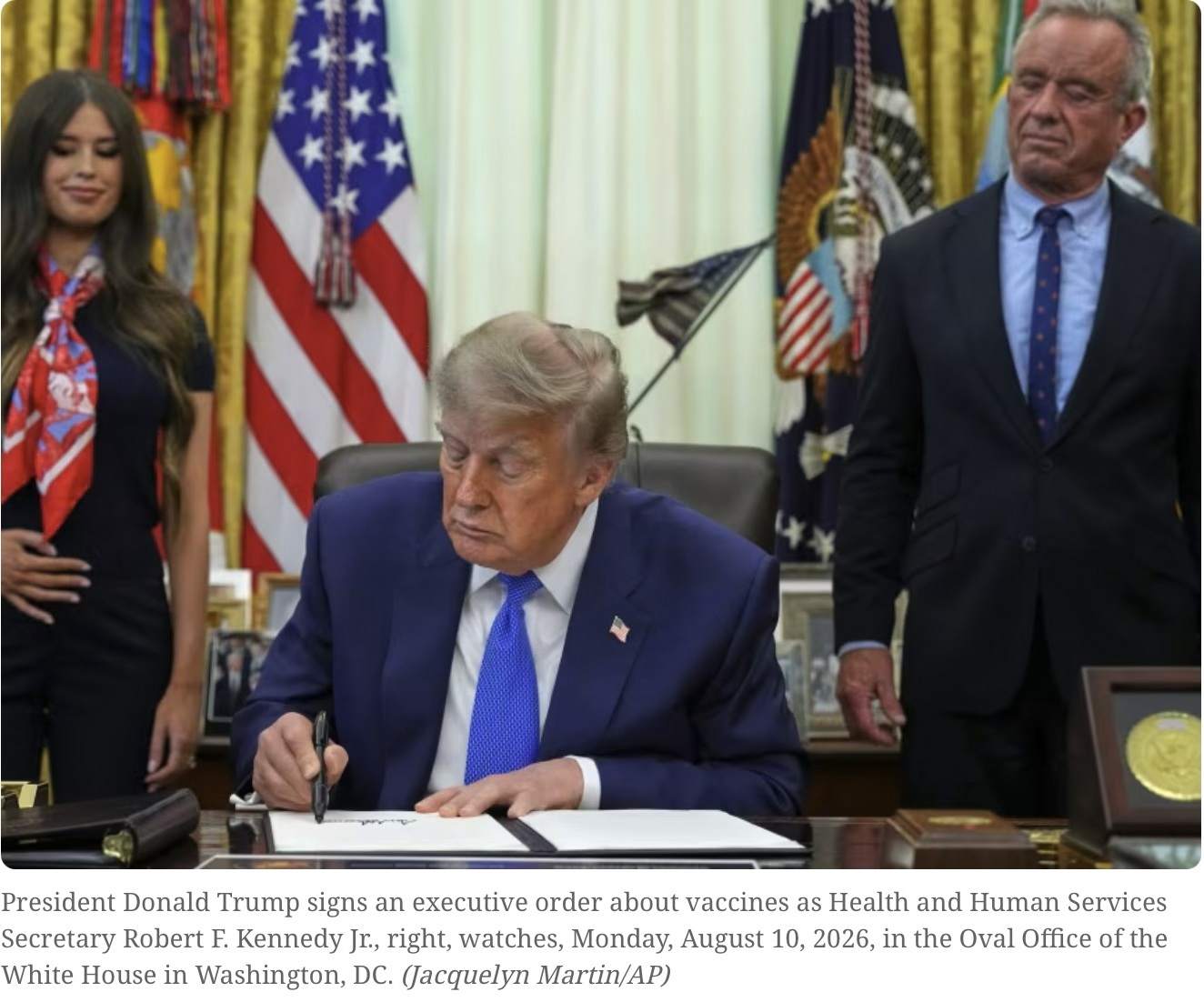
There is at least some reason for cautious optimism. At its most recent meeting, the committee—reconstituted after Robert F. Kennedy Jr. became Secretary of Health and Human Services—showed an unusual willingness to question long-standing assumptions surrounding the Hepatitis B vaccine recommendation for newborns. Observers saw something rare in recent years: open discussion of uncertainty, risk, and the limits of the available data.
Perhaps because of that willingness to examine vaccine risks more openly, the reconstituted committee has quickly become a target of criticism from parts of the public health establishment.
The upcoming meeting itself is now being challenged. Several major medical organizations—including the American Academy of Pediatrics—have filed litigation seeking to halt the committee’s work, arguing that the abrupt dismissal and replacement of the previous panel violated federal administrative law governing advisory committees. A federal judge is expected to rule before the March 18 meeting.
One of the lawsuit’s central claims is that the new committee is “biased” against vaccines. The charge is striking. For years, previous ACIP panels operated with extensive ties to vaccine manufacturers—relationships critics say created an environment where recommendations often appeared predetermined. Yet those concerns about bias rarely prompted calls to shut down the committee’s work.
But attempting to stop the discussion now will not resolve the growing public trust problem surrounding COVID vaccine safety. If anything, it risks deepening it.
Across the country, families describe myocarditis in young men, neurological conditions, autoimmune disorders, pregnancy complications, fast-acting cancers, and sudden deaths that occurred after vaccination. Whether every case is causally linked to the vaccines remains a question for scientific investigation. But the number of people reporting serious health problems has created a credibility crisis that cannot be resolved simply by asserting the rarity of side effects and pointing back to surveillance systems the public no longer trusts.
The question now is whether ACIP will examine the data—and the adverse signals—honestly.
Or whether the public will once again be told they were never there.
Addendum: Public Comment Opportunity
The upcoming ACIP meeting will include a formal public comment period.
Members of the public may submit written comments to the committee until March 12, 2026 at 11:59 p.m. Eastern Time.
If you want ACIP to hear your experience directly, submit a public comment here:
Submit a comment:
https://www.regulations.gov/docket/CDC-2026-0199
For families who believe they or a loved one experienced a serious adverse event following COVID vaccination, this may be one of the few opportunities to place those experiences directly into the official record.
Rita is a medical freedom attorney and former law school professor who now writes on a variety of medical freedom issues. A former FNF board member, Rita was also part of the legal team at FLTJ, the firm that represented Free Now Foundation in lawsuits against K-12 Covid mandates and prolonged states of emergency. You can follow more of Rita’s work at: https://legalglass.substack.com/

0 Comments